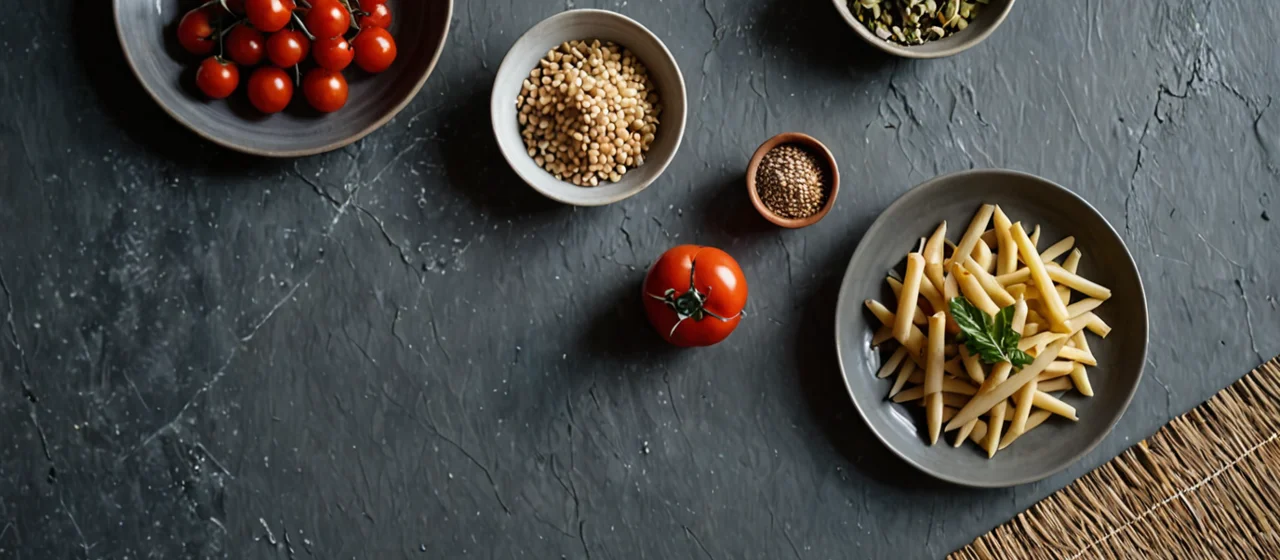
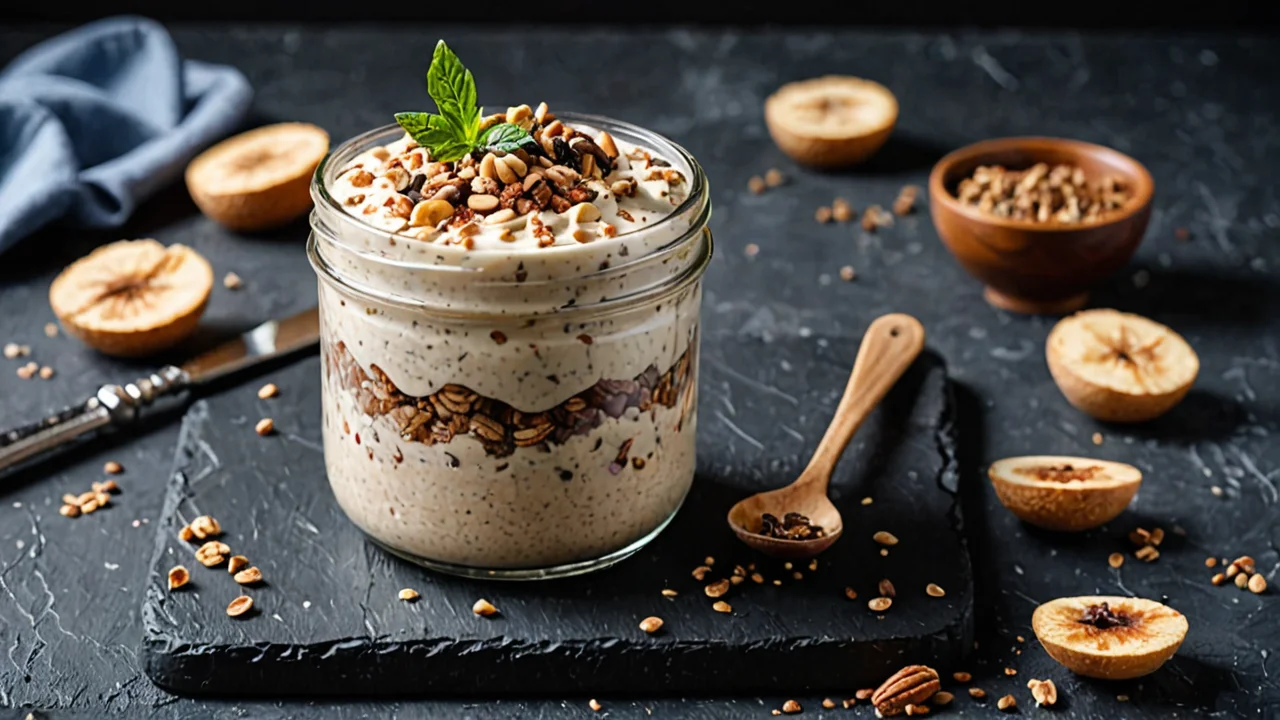
Dietary adaptation in Italian cooking almost never means substituting one ingredient for another and carrying on; it means choosing a different dish, or accepting that the version you are about to make is a different dish with the same name. Carbonara is the clearest test. The authoritative Roman version has five ingredients — guanciale, Pecorino Romano, eggs, black pepper, pasta — and every dietary restriction you might bring to it removes or replaces one of those five, which means the result is no longer carbonara in any strict sense. The rest of this page is about how to make that trade knowingly: which substitutions hold a dish together, which quietly wreck it, and where the honest move is to cook something else entirely.
Why the five-ingredient rule matters before you change anything
Count the ingredients in a dish before you adapt it. A recipe built on five things has almost no slack: take out the cured pork and the fat that carries the black pepper, and you have removed the backbone of the sauce, not a garnish. A recipe built on twelve things usually survives the loss of two. This is why the same substitution that works beautifully in one dish fails in another, and why the failure is so hard to predict from the ingredient list alone.
Carbonara is defined by guanciale — cured pork jowl — and by Pecorino Romano, eggs, black pepper and pasta. Four of those five carry flavour or structure that nothing else does the same job for. Guanciale brings cured fat that renders into the sauce and seasons it from within; Pecorino brings salt and a sharp, sheepy edge; eggs are the emulsifier and the body; black pepper is the aromatic; pasta is the starch that holds the emulsion together. Remove the pork and you have lost both the fat and the cure. Remove the cheese and you have lost the salt and the sharpness. Remove the egg and there is no sauce at all. Only the pepper is genuinely negotiable.
The same logic applies across the cuisine. A dish that reads as "tomato, garlic, oil, pasta" tolerates a lot of change because there is nothing in it to lose. A dish that reads as "three things, done precisely" does not. Before you decide how to adapt, decide how much of the dish is load-bearing. If the answer is "most of it", the adaptation is really a new recipe and should be judged as one.
Eggs, dairy and the emulsion problem
Eggs do two jobs in Italian cooking: they bind, and they emulsify. In carbonara they do the second, and the technique that makes it work is timing, not ingredients. The egg mixture goes in off the heat and is mixed for 30–60 seconds — long enough to thicken into a glossy sauce, short enough that the eggs do not scramble. That window is the whole dish. If you are adapting for someone who avoids eggs, no single replacement reproduces the thickening-and-emulsifying behaviour at once, and the sauce will either be thin or grainy depending on which way you push it. The honest options are a starch-thickened sauce, which is a different dish, or a dish that never needed the egg in the first place.
Dairy is more forgiving because the role is usually salt and richness rather than structure. Pecorino Romano is a hard, salty sheep's cheese; Parmigiano Reggiano is a hard cow's cheese, nuttier and less sharp; a aged pecorino from elsewhere is somewhere between. Swapping one hard grating cheese for another changes the flavour profile but keeps the dish intact. Swapping a hard grating cheese for a soft one — mozzarella, ricotta, a fresh sheep's cheese — does not, because the water content and the melting behaviour are different things entirely. You will notice in the texture first: the sauce turns watery or stringy rather than coating the pasta.
For readers avoiding dairy altogether, the trap is reaching for a plant-based hard cheese and expecting it to season the dish the way Pecorino does. Most do not carry the same salt load, so the dish tastes flat and the cook adds more salt, which throws off the balance. Taste the cheese on its own before you commit it to a sauce. If it does not taste sharply of salt and age, it will not do the job the recipe assumes.
Pork, cured meat and what guanciale is actually doing
Guanciale is cured pork jowl, and its function in a pasta dish is to render fat slowly enough that the fat becomes the sauce's base while the meat crisps at the edges. Pancetta comes from the belly and renders differently — more fat, less cure, a softer texture. Bacon is smoked, which introduces a flavour the Roman dish never had. Each is a real substitution with a real cost: pancetta gets you closer than bacon, and neither gets you all the way. If the point of the dish is the cured-pork flavour, the substitution is the whole dish; if the point is a rich pasta with a savoury edge, any of the three works and the choice is about what you want to taste.
For readers who avoid pork entirely, the question is whether the dish needs cured meat or just needs fat and salt. In many Italian preparations it needs the cure — the aged, savoury depth that comes from months of curing — and no vegetable substitute reproduces it. Mushrooms give umami but not cure; smoked paprika gives smoke but not depth; a good olive oil gives fat but not salt. You can build a perfectly good pasta this way, but you are cooking a different recipe, and it will not taste like the original however closely you follow the method.
The practical test is what the meat does in the pan. Guanciale releases fat slowly and crisps without burning; if your substitute releases water first, you will stew rather than render, and the texture of the finished dish will be soft where it should be crisp. Render it low and slow, pour off the excess if the substitute is fattier than jowl, and use the rendered fat as the base for the sauce. That part of the technique survives any substitution.
Gluten, grains and the shape of the dish
Pasta is durum wheat and water, and the gluten is what gives it bite. Gluten-free pasta exists and has improved enormously, but it behaves differently in the pan: it releases more starch into the water, it overcooks faster, and it does not hold an emulsion the way wheat pasta does. For a dish like carbonara, where the sauce depends on starchy water and a fast toss, the difference is noticeable — the sauce will be looser or break more easily. Cook gluten-free pasta a minute or two short of the package time and reserve more cooking water than you think you need; you will use it.
Gnocchi is the case where the definition itself is contested. The Cambridge English Dictionary defines it as "small round balls", and the dish as "an Italian dish of small potato- or flour-based dumplings, usually served with sauce." That "potato- or flour-based" is doing a lot of work: potato gnocchi and flour gnocchi are different doughs with different handling, and a gluten-free flour gnocchi is a third thing again. If you are adapting for gluten, flour-based gnocchi is the harder case because the flour is the structure; potato gnocchi with a gluten-free flour blend is more forgiving because the potato is already doing most of the binding. Expect a softer dumpling and cook them in smaller batches so they do not crowd and collapse.
Rice, polenta and legumes are the other routes. A risotto carries a sauce the way pasta does, and it is naturally gluten-free; polenta under a rich sauce is a real Italian answer to the same problem. None of these is pasta, and none of them should be presented as such. The cost of the substitution is the shape and the chew, and that cost is worth naming at the table rather than pretending it is not there.
Sugar, coffee and the dessert problem
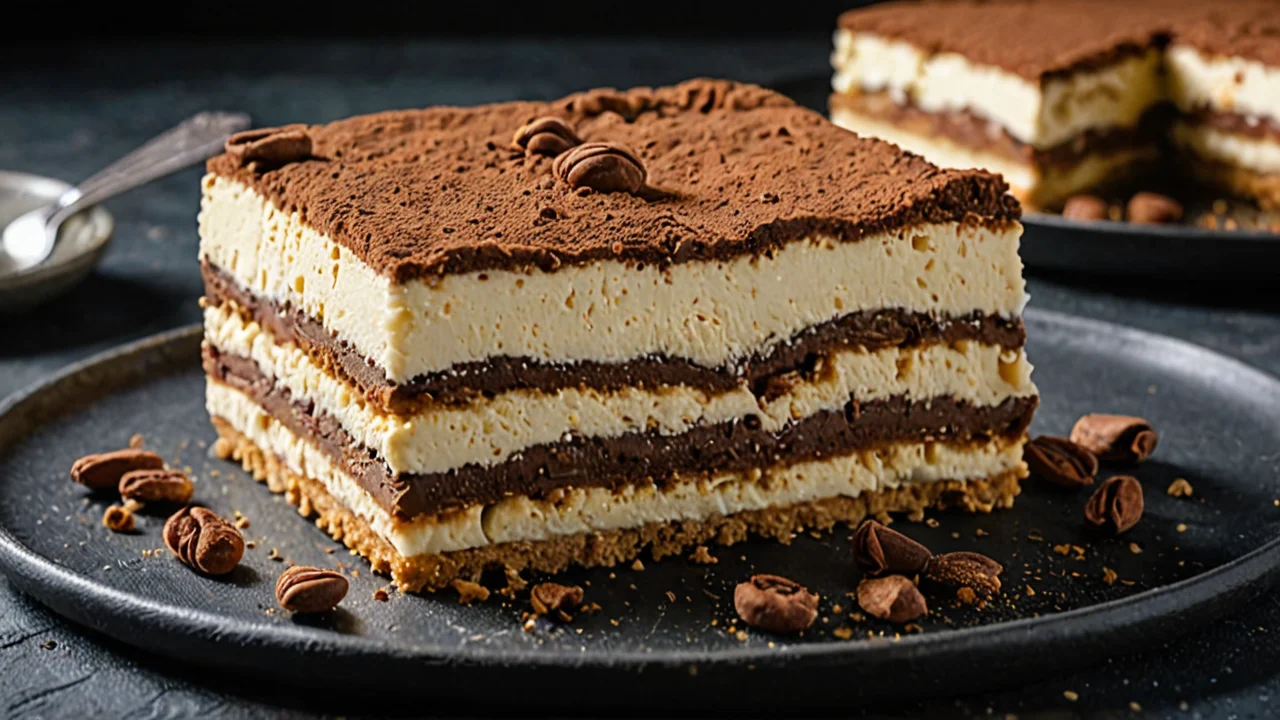
Tiramisu is defined by its construction: layered coffee-soaked biscuits and a creamy filling. Adapt it and you are changing one of the two things that make it what it is. The coffee is the easier half — decaffeinated espresso soaks the biscuits the same way and the difference is in the drinking, not the eating. The creamy filling is the harder half, because it is usually built on eggs and a soft cheese, and both are structural. A filling that omits the eggs needs a different setting mechanism; a filling that omits the cheese needs a different richness. You can make a good layered coffee dessert without either, but it will be a different dessert, and calling it tiramisu sets an expectation it will not meet.
The biscuits are the third variable. Savoiardi are dry, light and absorbent; a gluten-free sponge will absorb differently and may go soggy faster. Soak them briefly and in one motion rather than letting them sit — the difference between a tiramisu that holds its layers and one that slumps is usually a few seconds per biscuit, not a change of ingredient. If you are working with a substitute biscuit, test one before you commit the whole batch: press it into the coffee, lift it out, and see whether it holds its shape.
The honest position on dessert adaptation is that sugar and dairy are the two places where substitution most often produces something nobody wants to eat. If the goal is a dessert that fits a restriction, choose a dessert that was built for it — a fruit-based sweet, a nut-based torte, a sorbet — rather than rebuilding a cream-and-egg construction with replacements. The result will be better and the cook will be less frustrated.
Building the adapted menu, and when to stop adapting
Adapt at the level of the menu, not the recipe. A table that needs one dish free of pork, one free of gluten and one free of dairy is easier to feed with three dishes that were never built around those ingredients than with three versions of the same dish, each missing something. Italian cooking gives you a deep bench here: vegetable antipasti, bean and grain dishes, seafood preparations, fruit desserts. The constraint is the shape of the meal, not the number of substitutions you can stack into one pot.
When you do adapt a single dish, change one thing at a time and taste at each stage. The failure mode in adapted cooking is compounding: you swap the pork, then the cheese, then the pasta, and by the end you cannot tell which change broke the dish. Cook the original once, note what each ingredient is doing, then remove one and see what happens. That is slower than following an adapted recipe from a book, and it teaches you more.
Know when to stop. If a dish is defined by five ingredients and you have replaced three of them, you are not adapting it — you are inventing a new dish and borrowing its name. That is fine, and it is often delicious, but it should be presented honestly. The clearest signal is the name: if you would not serve it to an Italian cook without explaining what you did, it is a new recipe. Give it a new name and everyone at the table relaxes, including you.
| Restriction | What usually survives | What usually does not |
|---|---|---|
| No pork | Fat, salt and savoury depth from oil, cheese and mushrooms | The cured flavour of guanciale; the crisp rendered texture |
| No egg | Starch-thickened sauces; dishes that never relied on egg | The emulsified body of a carbonara-style sauce |
| No dairy | Olive oil as a fat; plant-based hard cheeses with real salt | The sharp salt of Pecorino Romano; soft cheese melting behaviour |
| No gluten | Rice, polenta, legumes, potato-based gnocchi | The chew of durum wheat pasta; the starch water that holds an emulsion |
| No caffeine | Decaffeinated espresso in a soaked-biscuit dessert | Nothing structural — the coffee is flavour, not architecture |
The pattern in that table is consistent: fat, salt and flavour survive substitution; structure and cure do not. Cook to that rule and most adaptations will land somewhere between good and honest, which is the most any substitution can promise.